Sofa cleaning with care for the fabric you actually have
The seat used every evening will not wear like the back of the sofa. Tell us about the fabric, removable cushions and any marks so the team can assess the upholstery rather than promise a one-method clean.
- Fabric and care code considered
- High-use seats and arms discussed
- Drying and use planned in advance
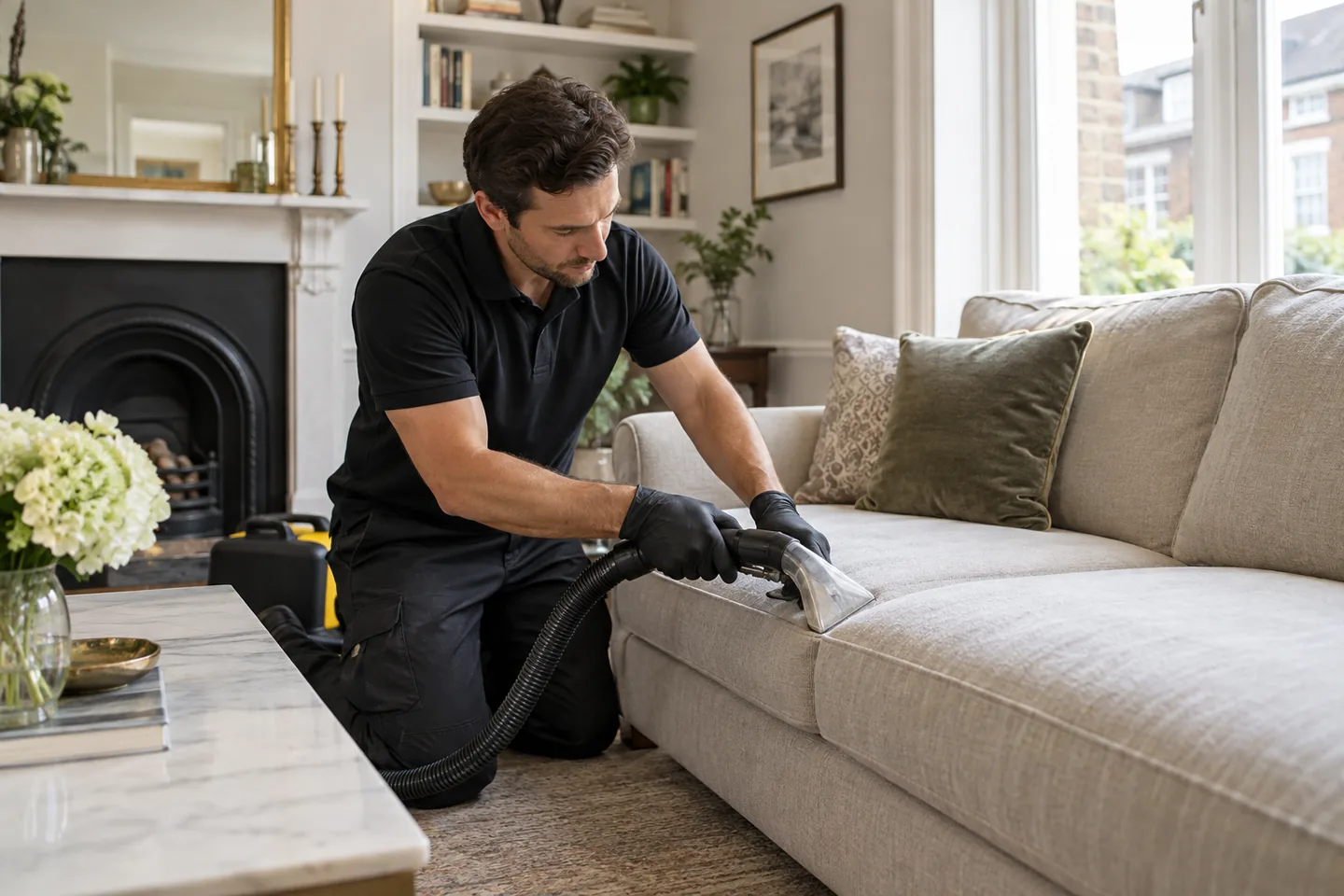
in Fulham
Start with the care label and the wear
A sofa gathers dust, body oils and small spills through ordinary use. Arms, front edges and the most-used seats often show it first. That uneven wear matters when deciding where to focus and what a realistic finish looks like. An older mark may be in the fibre or padding rather than only on the surface.
Look for an upholstery care label and tell the team whether covers are removable. Fabric composition, dye and construction affect what can safely be used. Treatment depends on the sofa material; no single method is safe for every sofa. We will discuss any limits before applying moisture or cleaning products.
Cleaning may refresh the appearance and feel of fabric, but it cannot erase wear, sun fading or all stains. If a sofa has a fragile seam, loose colour, leather elements or earlier treatment residue, make that part of the initial enquiry. A good assessment gives you a clear expectation, not an inflated promise.
Look at the upholstery in daylight before asking for a quote. A darkened seat may be ordinary use; a pale patch may be wear or dye loss rather than dirt. One arm can show greasy contact marks while the other is nearly untouched. Pointing out this pattern gives a more useful brief than saying the whole sofa is stained. It also allows the team to explain why different areas may not finish with identical colour or texture.
Care labels are sometimes tucked under the frame or cushion. If you find a code, photograph it; if you cannot, say so. A label may restrict water or solvent use, and decorative trims can have another material from the seats. The team needs to decide what is suitable for each part before beginning. A method suitable for a nearby carpet may be wrong for the sofa fabric.
An old stain has a history. Coffee may have been blotted immediately, a food mark may have been scrubbed with household detergent, or a pet accident may have reached the padding. Explain what happened and what you tried. Surface cleaning can sometimes improve the visible mark while the underlying cause remains. The team should discuss that limit before quoting; repeating strong treatment in pursuit of a perfect result can damage the fabric.
Consider the sofa’s position in the room. A large sectional against a wall, a chaise with fixed seats and a two-seater with loose cushions present different access. Move only light objects yourself and ask what clearance is needed. If every cushion is included, count them in the enquiry. If the backs are not normally seen, decide whether you still want them treated; the scope and price should reflect that choice.
After treatment, keeping children, pets and throws off the damp fabric may be necessary for a while. Airflow can help, but exact drying depends on fabric, padding and the chosen care. If the sofa is the only seat in the home, raise that before booking. A quote is useful only when it includes the practical time you will be without the furniture, not just the visible work on the day.
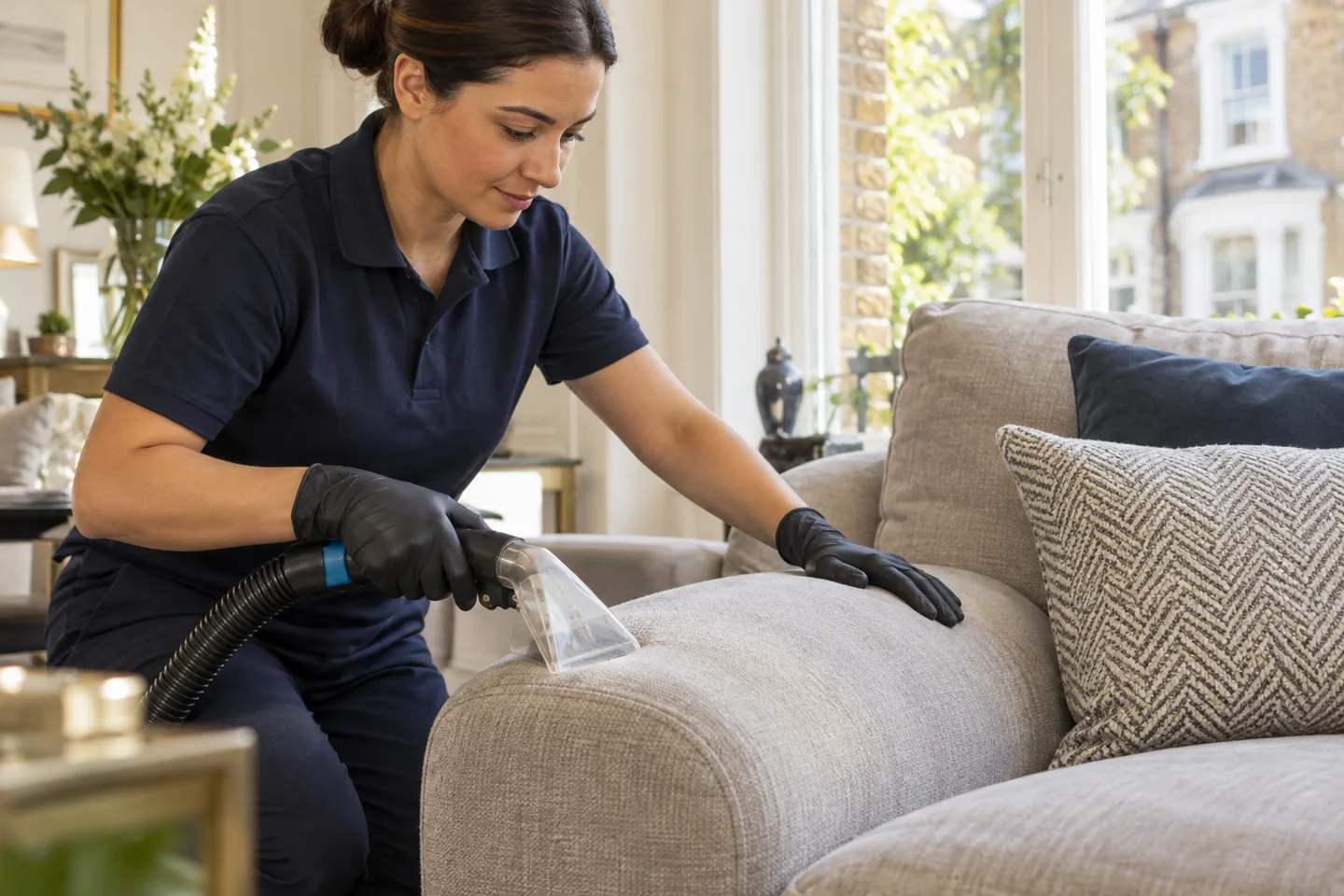

Make the sofa accessible without forcing it
Remove small objects and check under loose cushions for items. If the sofa is close to a wall or heavy furniture, explain what can be moved safely. Do not assume the team will dismantle or shift a large piece as part of an ordinary booking.
Photograph notable marks and say when they happened. A fresh spill, old water ring and dye transfer pose different questions. If you have used a home cleaner, disclose it; remaining product can change how later treatment behaves.
Plan an alternative seat while the upholstery dries. Drying depends on material, treatment, ventilation and room temperature. Ask for guidance for your sofa rather than relying on a fixed number of hours from an unrelated example.
If pets or children use the sofa, mention that context but avoid expecting any hygiene or allergen claim that has not been measured. The useful aim is a treatment suited to the fabric and the condition you describe. For a wider room refresh, carpet or rug care may be a separate conversation.
Check whether the seating has fixed cushions, removable covers or a mixed-material frame. A seat may be fabric while a decorative panel is leather or velvet; that can alter the work even though the sofa is sold as one piece. If someone has tried to scrub a water ring, mention it. The mark may now include cleaning-product residue, and chasing it without assessing the upholstery can leave a wider patch.
Define the upholstery pieces and areas
Tell the team about each piece and what needs attention:
Number of seats and loose cushions
Fabric or care code
Arms, backs and high-use seats
Visible spills and earlier stain products
Access, drying and use after treatment
A sofa may have a different material on the frame, cushions or decorative trim. Ask what will be treated and what must be left untouched.
Why sofa quotes differ
The number of seats, fabric and accessible cushions affect the work. Describe the marks and ask what is included and what price applies to your sofa.
Ask for a tailored quote| Service / option | From price | Typical basis |
|---|---|---|
| Fabric sofa, per seat | £33From | Per seat |
| Two-seat sofa | £66From | Per sofa |
| L-shaped three-seat sofa | £132From | Per sofa |
Questions about sofa cleaning
Discuss the details of your property with the team before booking.
Can you clean every sofa fabric?
The label, fabric and condition need checking. Some materials may require a different method or may not be suitable for the proposed treatment.
Will pet marks or old spills come out?
No stain result can be promised without assessment. Describe the source and any previous products so realistic options can be discussed.
Do removable cushions need separate care?
Tell the team how many there are and whether the covers come off. They should confirm what parts the quote covers.
When can I use the sofa again?
Drying varies with fabric and treatment. Ask for aftercare guidance for your sofa before planning normal use.
Talk about the fabric before treatment.
Tell us the fabric, the number of seats and the marks you want assessed. We can discuss care that makes sense for this sofa.