Mattress cleaning begins with a close look at seams and fabric
A mattress is used every night but seldom checked along its edges or beneath the bedding. Tell us its size, age and any marks so the team can explain what cleaning can and cannot address.
- Fabric and condition assessed
- Edges, seams and marks discussed
- Drying before reuse planned
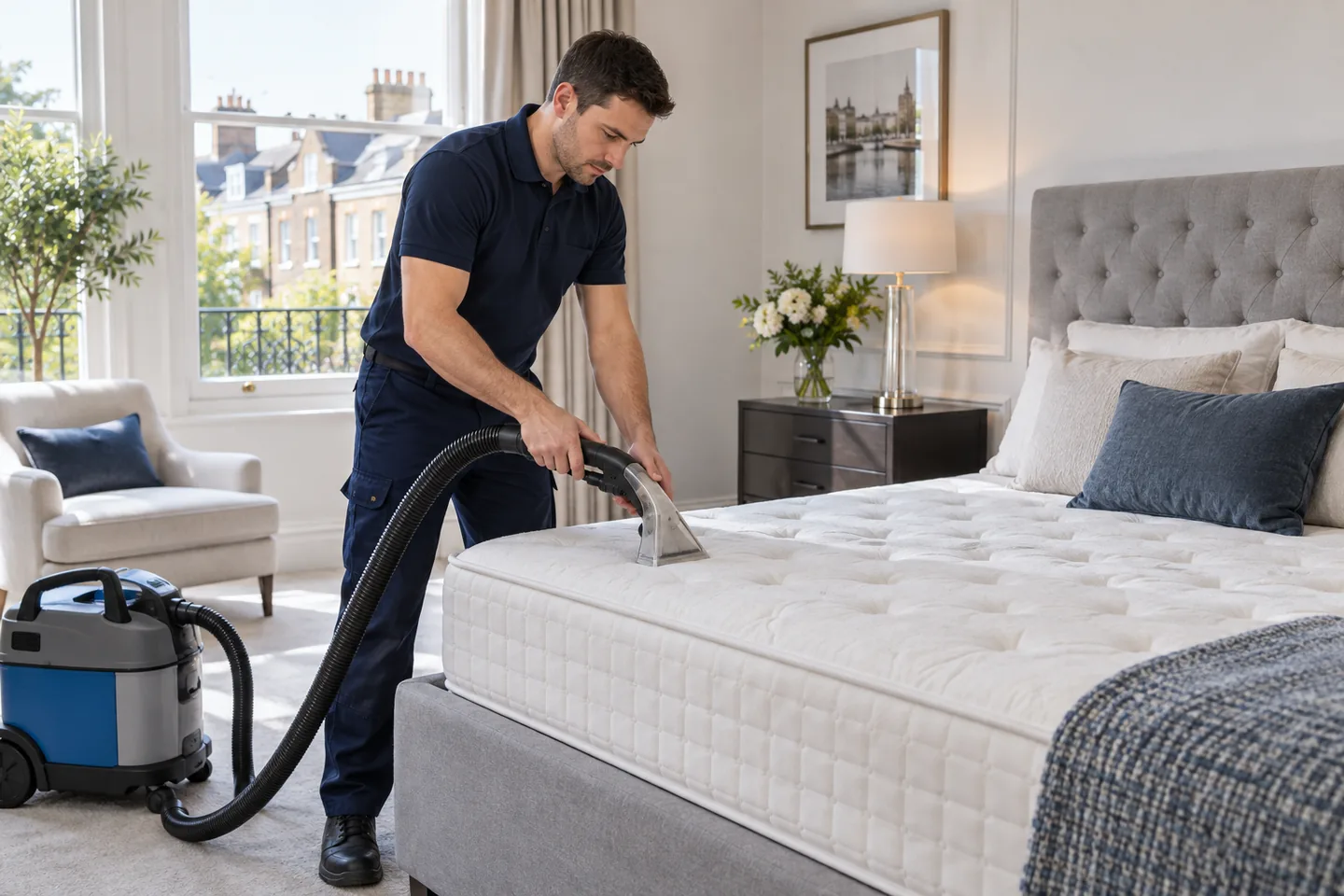
in Fulham
Know what a mattress clean can achieve
A mattress collects ordinary dust and visible marks at different points. Seams and edges can hold settled debris while the central sleeping area receives the most use. Looking at those different zones is more useful than a single uniform treatment; that is more useful than treating the mattress as one undifferentiated rectangle.
Fabric, filling, stain history and construction affect suitable care. A mattress that has been wet before, has damage to the cover or carries a care restriction needs assessment. Cleaning may improve its condition, but it cannot guarantee a medical result, remove every allergen or restore an older mattress to new condition.
Tell the team the mattress type and what concerns you. A visible spill calls for a different conversation from general dust. If a smell persists or the mattress has been damaged, cleaning may not resolve the underlying problem; the team should be candid about limits before you pay for treatment.

Details to discuss for a mattress
Provide what you know about the item:
Size and mattress type
Cover fabric and care instructions
Stains, odours and earlier treatments
Seams, edges and accessible sides
Drying time and bed use
Do not assume the base, bed frame or bedding is included. Ask whether turning or moving the mattress is practical and safe for the team.

Plan the appointment around bedtime
Remove bedding and tell the team whether the mattress can be reached from both sides. If the bed sits in a narrow room, explain the access. Do not try to move a heavy mattress alone merely to prepare for the visit; ask what access is needed.
Note any recent spill and any cleaning product already used. Earlier saturation or strong chemicals may change the possible treatment. Photographs can show the position of marks, while the fabric and condition still need a closer assessment.
Think about where you will sleep if the mattress needs more drying time than expected. Ventilation helps, but treatment, material and room conditions vary. Ask for guidance specific to the item before booking an evening with no alternative bed.
Keep expectations practical. Surface cleaning is not a repair for damaged filling, a broken spring or longstanding mould inside a mattress. If you suspect those issues, say so and seek an honest recommendation before choosing cleaning.
Before the call, distinguish a surface mark from a problem that seems to come from within the mattress. A stain on the cover can be assessed for suitable cleaning; a persistent damp smell or visibly damaged filling calls for a different decision. A mattress protector and freshly washed bedding can support ordinary upkeep afterwards, but they do not change the cleaning limits of a damaged mattress.
What changes a mattress quote
Mattress size, fabric, condition and drying needs all matter. Ask the team to confirm whether the item is suitable for treatment and what the agreed work will cost.
Ask for a tailored quote| Service / option | From price | Typical basis |
|---|---|---|
| Standard mattress | £35From | Per mattress |
Questions about mattress cleaning
Discuss the details of your property with the team before booking.
Does cleaning remove every mattress stain?
No result can be promised without seeing the material and stain history. Some marks may remain after suitable treatment.
Will it make the mattress safe for someone with allergies?
Do not treat cleaning as a medical guarantee. Ask what physical cleaning can achieve for the item, and seek medical advice for health concerns.
Can both sides be cleaned?
That depends on access, construction and the agreed scope. Mention the mattress type and room arrangement when enquiring.
When can I put the bedding back?
Drying time varies. Ask for item-specific aftercare and use the bed only when the treated fabric is suitably dry.
Discuss the mattress and drying time.
Tell us about the mattress, not just the stain. We can discuss whether cleaning is suitable and how to plan for drying.