Patio cleaning that takes the paving into account
An outdoor surface can look uniformly dull until you see darker growth in the joints and shaded corners. Tell us what the paving is made of, how it drains and where the build-up is before any method is agreed.
- Surface condition considered first
- Edges and joints included in discussion
- Access and drainage planned
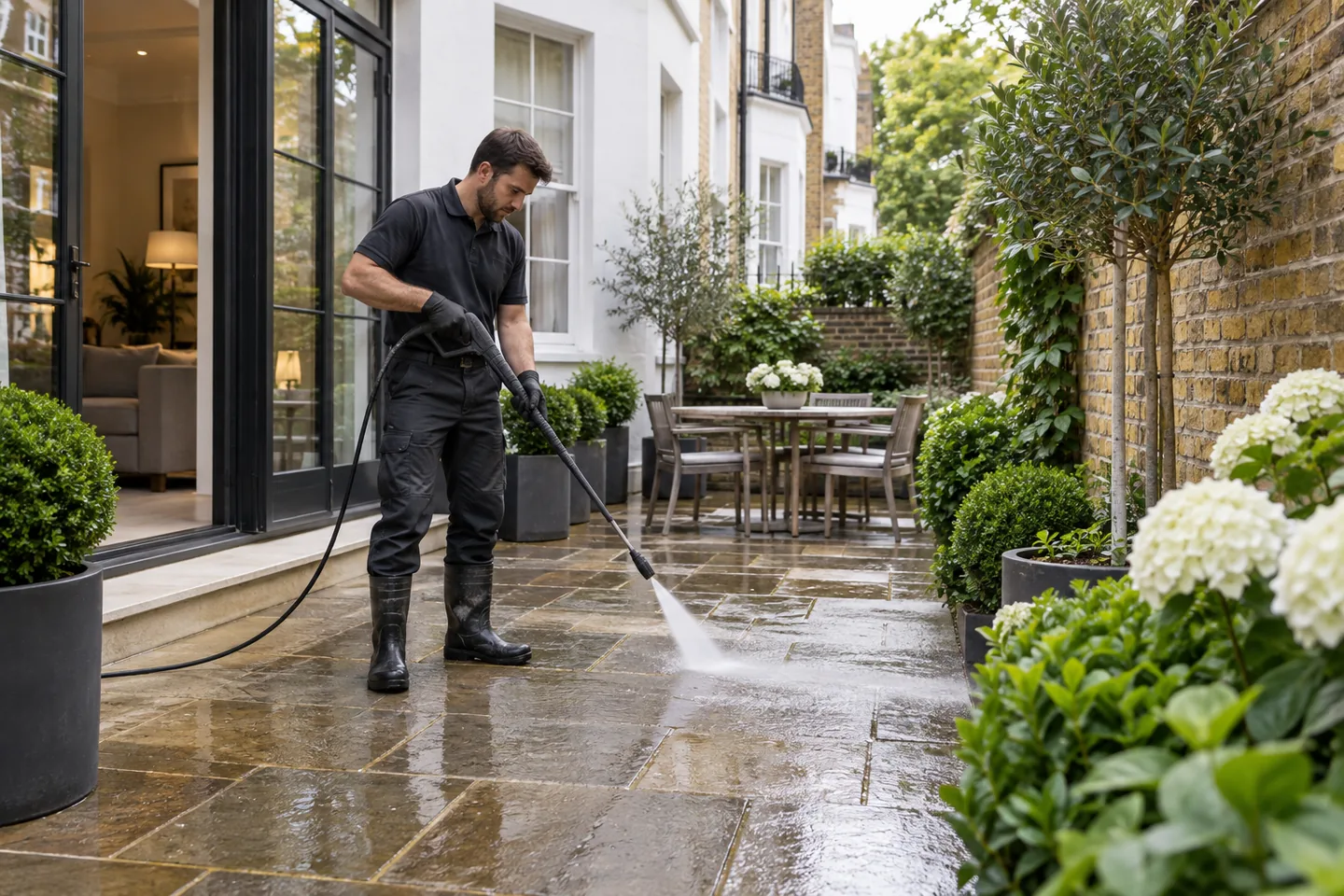
in Fulham
The surface matters as much as the growth
Paving in a small Fulham courtyard can collect dirt from shoes, leaf residue and organic growth after damp weather. Shaded areas may stay wet longer than the open section, so build-up often appears unevenly. A clean should respond to that pattern rather than treating every slab with the same pressure.
Stone, concrete, brick and older joints have different tolerances. Pressure can help on suitable paving, but it is not safe for every patio. Loose pointing, damaged edges or delicate stone should be raised before work starts. The team should assess a method that does not make an existing defect worse.
Ask what improvement is likely for the particular surface. Some staining or colour variation may be part of the material or its age. Cleaning can remove suitable deposits, but it cannot promise to restore every paving stone to its original colour or eliminate all future growth.
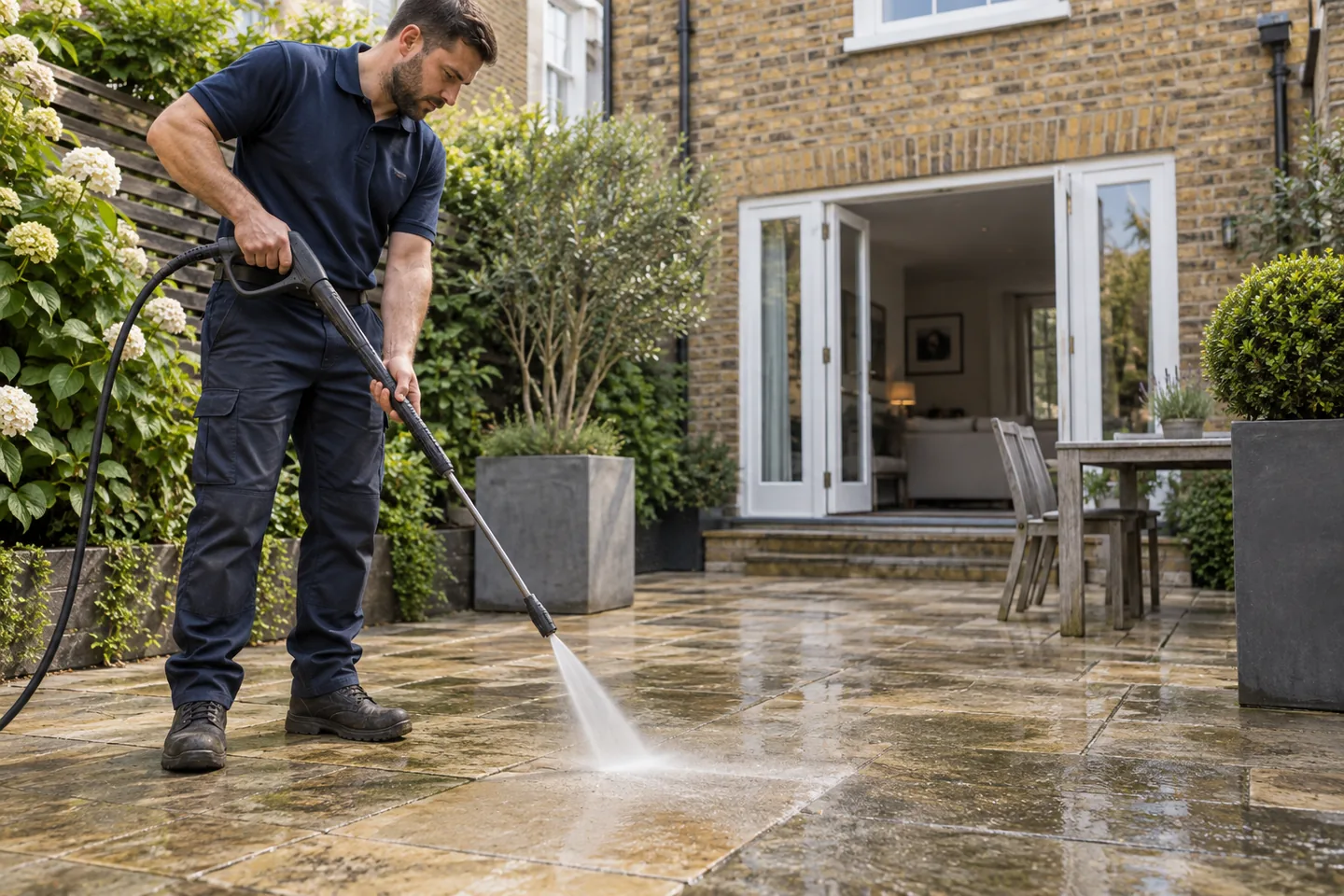

Check the route in and the route out
Measure the patio roughly and photograph the worst areas. Include an image of the joints, cracked edges or any stone that appears loose. Surface condition can change the appropriate method, so the quotation should not be based on area alone.
Clear lightweight furniture, pots and toys if it is safe to do so. Tell the team about fixed planters, delicate greenery, electrical fittings and nearby painted surfaces. Explain whether tools can reach the patio through a side passage or must pass through the house.
Discuss water access, runoff and drainage. On a courtyard with limited outlets, wastewater needs planning before treatment. Do not assume a particular machine or chemical will be used until the business confirms what is suitable.
Weather can affect both the appointment and how the surface dries. Ask about timing if you need the patio for a specific event. A result achieved in damp weather may also need realistic expectations for ongoing algae in persistently shaded areas.
Look at the areas immediately beside the patio, too. A painted fence, soft planting or a doorway can limit how a surface is treated. If the patio has been sealed before, mention it and ask whether the coating changes the method. Cleaning does not replace drainage repairs: a patch that stays damp because water pools there may become discoloured again after the visible deposits are removed.
Walk the patio before quoting
Important outdoor details include:
Paving material and surface condition
Approximate area and layout
Algae, moss, stains and shaded spots
Joint stability and surrounding plants
Water, drainage and access
Repairs, re-pointing, sealing and removal of heavy garden waste should not be assumed part of a clean. Ask the team to define the work clearly.
Why patio quotes vary
The paving material, build-up, drainage and access influence the method and time. Describe the surface so the team can discuss a suitable scope and cost.
Ask for a tailored quote| Service / option | From price | Typical basis |
|---|---|---|
| Suitable patio paving | £4/m²From | Area measured in square metres |
Questions about patio cleaning
Discuss the details of your property with the team before booking.
Can pressure cleaning damage paving?
Some surfaces or joints are vulnerable. Tell the team about cracks, loose pointing and delicate stone so the method can be assessed.
Will algae come back?
Outdoor growth can return, particularly in shade and damp conditions. Cleaning should not be presented as a permanent prevention treatment.
Do I need to move patio furniture?
Explain what is movable and what is fixed. Ask which areas must be clear before the appointment.
Does the quote include sealing or joint repairs?
Do not assume those works are included. Ask the team to confirm whether it offers them separately, if at all.
Let’s look at the paving first.
Tell us what the paving is made of and where the trouble spots are. We can discuss an outdoor clean with the surface in mind.